Friends of a Free Internet is a global movement fighting for digital rights and affordable internet access for all.
Stay informed about our latest activities, campaigns, and developments in the fight for digital rights.
Friends of a Free Internet is a collective of individuals and organisations committed to ensuring digital rights and affordable internet access for everyone.
Many see the fight for internet freedom as being against censorship and surveillance – but as Billy Bragg sang, "Freedom is merely privilege extended unless enjoyed by one and all". Freedom of Expression and control of the means of communication are two sides of the same coin.
Friends of a Free Internet are committed to both free online expression as well as universal access to communication commons that is user owned and controlled, decommodified, free/affordable, safe and secure.
We are committed to economic, social and ecological justice and envision a communications system that enables a world where all the resources required for life are produced democratically in harmony with the biosphere by each according to their ability and shared according to their needs.
We believe in a multi-faceted approach to achieving digital freedom and internet accessibility:
Engaging with policymakers, regulators, and government bodies to ensure digital rights are protected and affordable access becomes a reality for all communities.
Building grassroots movements and empowering local communities to advocate for their digital rights and access needs.
Providing resources, workshops, and information to help people understand their digital rights and how to protect them.
Collaborating with like-minded organisations, technologists, and activists to amplify our impact and reach.
Friends of a Free Internet operates as a collective, bringing together diverse voices and expertise to advance our shared mission.
This campaign is an initiative of the Yetu Infotech Collective and the People's Media Consortium, who provide strategic direction and operational support.
Our network includes activists, technologists, researchers, and concerned citizens who contribute their skills, time, and energy to our campaigns.
Local communities and organisations across South Africa and beyond who stand with us in the fight for digital rights and internet freedom.
Understanding the digital landscape and the challenges we face in achieving internet freedom and accessibility.
67.3% of South Africa has access to the Internet and the potential to access information and publish at very low cost. There are many alternatives to for-profit networks.
But the vast majority have no access to broadband/fibre and rely on slow profiteering mobile networks to access the internet. Access mirrors and reproduces broader racial and gender inequalities.
The Internet can offer activist organisations a platform for their own internal democracy, organising efforts, and amplify their voice. However, surveillance and lack of privacy make on-line organising efforts vulnerable to repression.
Historically around the world network access has expanded, the cost of data has decreased, and network speeds have increased.
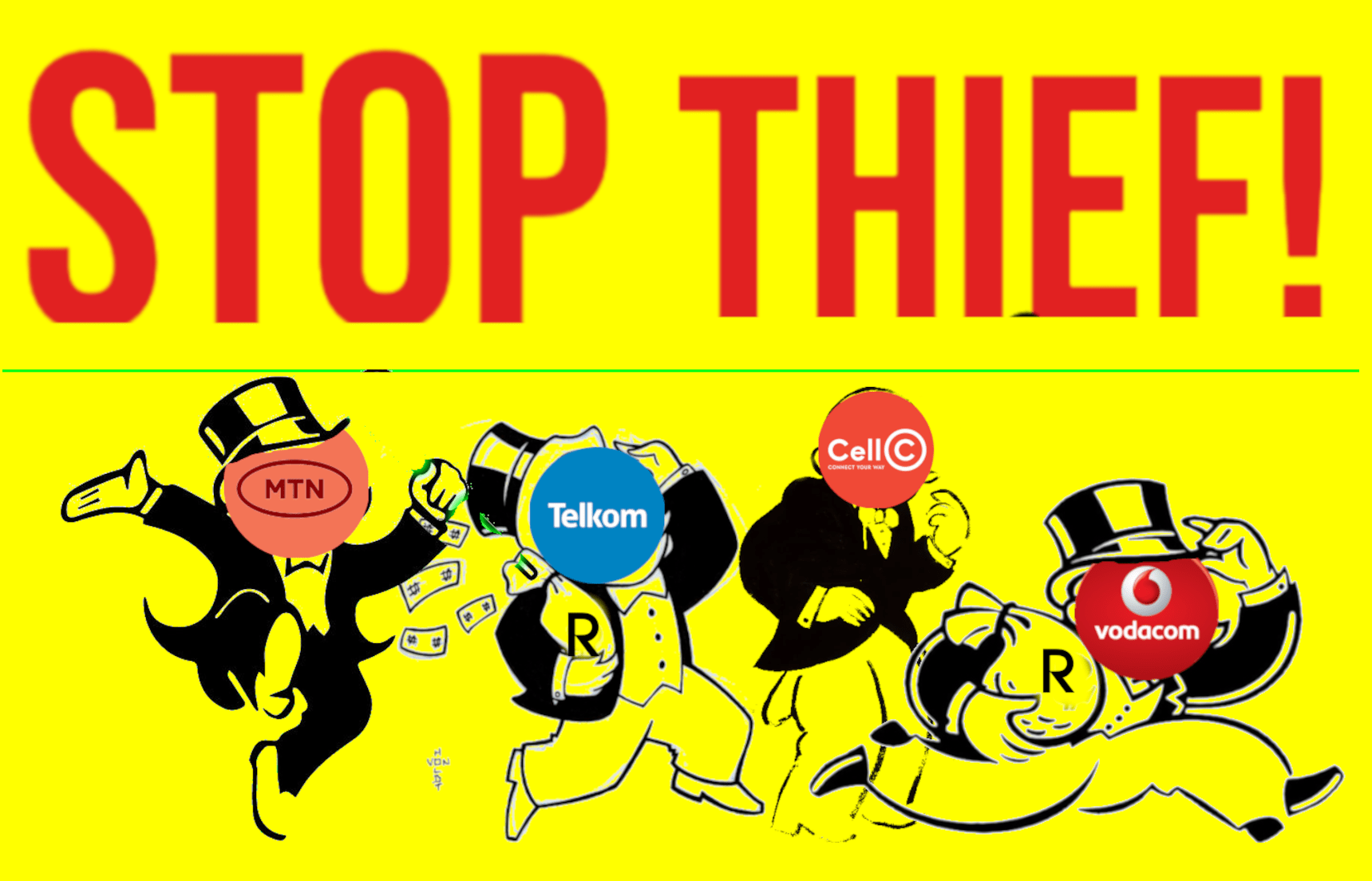
SA's networks are dominated by commercial interests that put profit before people and the Government has consistently missed their connectivity targets.
ICASA has recently published regulations obligating networks to over 97% of SA and connect public buildings (schools, clinics, etc). Commercial networks in the past have chosen to pay minimum fines rather than cover the cost of building networks in "uneconomical" areas.
ICASA's new regulations also obligate networks to zero-rate PBO mobile content. The conditions of zero-rating will be highly contested by network/internet profiteers.
South Africa's Bill of Rights protects free expression and technology is making expression increasingly easy. However, the newly enacted Internet Censorship Act gives the Film and Publication Board teeth to regulate and take down online content. Hate speech law is in the pipeline.
The Bill of Rights also protects privacy and the Information Regulator has been set-up to defend privacy. The Constitutional Court has ordered parliament to amend RICA and the Mufamadi Report has recommended reform of State Security.
Despite these protections, surveillance capitalism collects and commodifies personal information (in exchange for "Free Services"). The SA government has not amended RICA or implemented the Mufamadi recommendations.
Information technology (Infotech) is increasingly shaping our lives and the Covid pandemic has accelerated the need for online interaction.
This process has the potential to enable greater access to information, openness and transparency, greater freedom of expression, solidarity, as well as stronger and more democratic forms of organising. But the digital age is reproducing the inequality and injustice of the society it is emerging in.
We see not only an increasing divide between the power of those who have decent internet access and the majority, but also new forms of domination. Rising authoritarianism (including surveillance, censorship and propaganda) is transforming our public spaces into open air prisons where we are constantly watched and trained to police ourselves.
The right to communicate is emerging as a critical freedom to defend and advance in response to a digital feudalism where governments and a handful of large corporations control networks, platforms, technology and can shape content.
Access our collection of resources, research, and tools to support digital rights advocacy.
No resources available at the moment. Check back soon for new materials.
Get in touch with us for enquiries, collaborations, or to learn more about our work.
friends@freeinternet.africa
+27 (0) 63 875 2330